
Semester at Sea Morocco travel Guide
Semester at Sea Morocco: A Complete Guide for Students Visiting Morocco
Morocco is one of the most fascinating destinations for students traveling with Semester at Sea. Located at the crossroads of Africa, Europe, and the Arab world, Morocco offers an exceptional opportunity to discover different cultures, historic cities, traditional communities, dramatic landscapes, and centuries-old trade routes in one journey.
For Semester at Sea students, a visit to Morocco is much more than sightseeing. It can be an opportunity to experience Moroccan culture directly, learn about the country’s history, interact with local communities, explore diverse environments, and gain a better understanding of North Africa.
From the lively streets of Marrakech to the ancient medinas of Fes, the dramatic Atlas Mountains, the UNESCO-listed Ait Benhaddou, and the vast Sahara Desert, Morocco provides a remarkable setting for educational and cultural exploration.
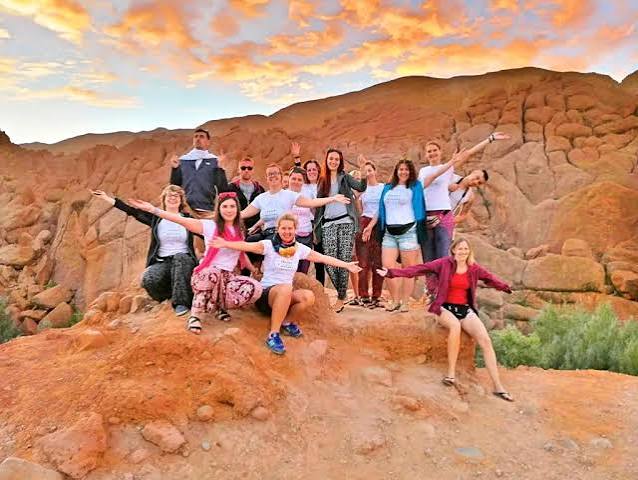
What Is Semester at Sea?
Semester at Sea is an educational program that allows university students to study while traveling between different countries aboard a ship. Instead of spending an entire semester on a traditional campus, students combine academic courses with international travel and experiential learning.
The program gives students the opportunity to visit multiple destinations and experience different societies firsthand. Each port of call can become an extension of the classroom, allowing students to connect what they learn academically with real-world experiences.
Morocco can be particularly valuable in this context because of its geographical position and its combination of Arab, Amazigh, African, Mediterranean, and European influences.
Why Is Morocco an Important Destination for Semester at Sea Students?
Morocco offers an unusually diverse cultural and geographical experience within a relatively compact country.
A student can visit a historic imperial city, cross mountain landscapes, explore a traditional Berber or Amazigh village, and reach the Sahara Desert within the same trip.
Morocco’s cultural diversity
Moroccan culture has developed through centuries of interaction between different civilizations and communities. Arab and Amazigh traditions are particularly important, while Morocco’s history also reflects African, Mediterranean, Jewish, Andalusian, and European influences.
Students can observe this diversity through:
- Traditional architecture
- Moroccan cuisine
- Local markets and souks
- Handicrafts
- Music and cultural traditions
- Religious and historic monuments
- Amazigh communities
- Traditional riads
- Agricultural and rural life
Morocco’s geographical diversity
Morocco is also an excellent destination for students interested in geography and the environment.
The country includes:
- Atlantic and Mediterranean coastlines
- The Rif Mountains
- The High Atlas Mountains
- The Anti-Atlas Mountains
- Valleys and oases
- Semi-arid landscapes
- Fossil-rich desert regions
- The Sahara Desert
This geographical variety makes Morocco particularly interesting for students studying environmental science, geology, geography, anthropology, tourism, or related subjects.
What Can Semester at Sea Students Do in Morocco?
The ideal Morocco experience depends on the student’s interests, available time, and port itinerary. Some students may prefer cultural exploration, while others may want an adventure through the mountains and desert.
A well-organized Morocco excursion can combine several experiences without making the journey unnecessarily rushed.
Explore Marrakech and Its Historic Medina
Marrakech is one of Morocco’s most famous cities and an excellent introduction to Moroccan culture.
The historic medina is characterized by narrow streets, traditional architecture, artisan workshops, markets, and historic monuments.
Visit Jemaa el-Fna Square
Jemaa el-Fna is the famous central square of Marrakech and one of the city’s most recognizable landmarks.
During the day, visitors can experience the busy atmosphere of the square and surrounding souks. In the evening, the area becomes particularly lively as food stalls and local activities fill the space.
For students, the square offers an opportunity to observe how public spaces function as important social and cultural gathering points.
Discover the Marrakech souks
The souks surrounding Jemaa el-Fna provide an opportunity to discover traditional Moroccan crafts.
Depending on the area, students may find:
- Leather goods
- Carpets
- Pottery
- Metalwork
- Spices
- Traditional clothing
- Woodwork
- Handmade souvenirs
A guided visit can also help explain the history and cultural significance behind these crafts.
Discover the Ancient City of Fes
Fes is another important destination for students interested in Moroccan history and culture.
The historic medina of Fes is famous for its narrow streets, traditional workshops, historic schools, mosques, markets, and traditional architecture.
Explore Fes el-Bali
Fes el-Bali is the oldest part of the city and is particularly valuable for understanding Morocco’s urban history.
Students can observe traditional craftsmanship and explore the historic streets with a local guide who can provide cultural and historical context.
Learn about Moroccan craftsmanship
Fes has a long tradition of craftsmanship. Leatherworking, ceramics, metalwork, woodwork, embroidery, and other artisanal activities remain important parts of the city’s cultural identity.
A guided cultural experience can transform a simple visit to an artisan workshop into an educational opportunity.
Cross the Atlas Mountains
The Atlas Mountains are another major attraction for Semester at Sea students visiting Morocco.
The mountain landscapes provide a completely different environment from Morocco’s major cities.
Depending on the route, travelers may encounter mountain villages, valleys, agricultural terraces, rivers, and panoramic viewpoints.
Experience Amazigh culture
The Atlas Mountains are home to many Amazigh communities.
Visiting rural areas with a responsible local guide can provide students with a better understanding of traditional lifestyles, agriculture, architecture, and community life.
This type of experience can be especially meaningful for students interested in anthropology, sociology, cultural studies, or sustainable tourism.
Visit Ait Benhaddou
Ait Benhaddou is one of Morocco’s most famous historic sites and is recognized as a UNESCO World Heritage Site.
The fortified village, or ksar, is located along an ancient caravan route between the Sahara and Marrakech.
Its earthen architecture provides an excellent example of traditional construction adapted to the environment.
Why Ait Benhaddou is interesting for students
A visit to Ait Benhaddou can introduce students to several subjects at once, including:
- Moroccan history
- Traditional architecture
- Desert trade routes
- Cultural heritage preservation
- Tourism development
- Local communities
- Environmental adaptation
The site has also appeared in numerous international film and television productions, adding another interesting dimension to its cultural significance.
Experience the Sahara Desert
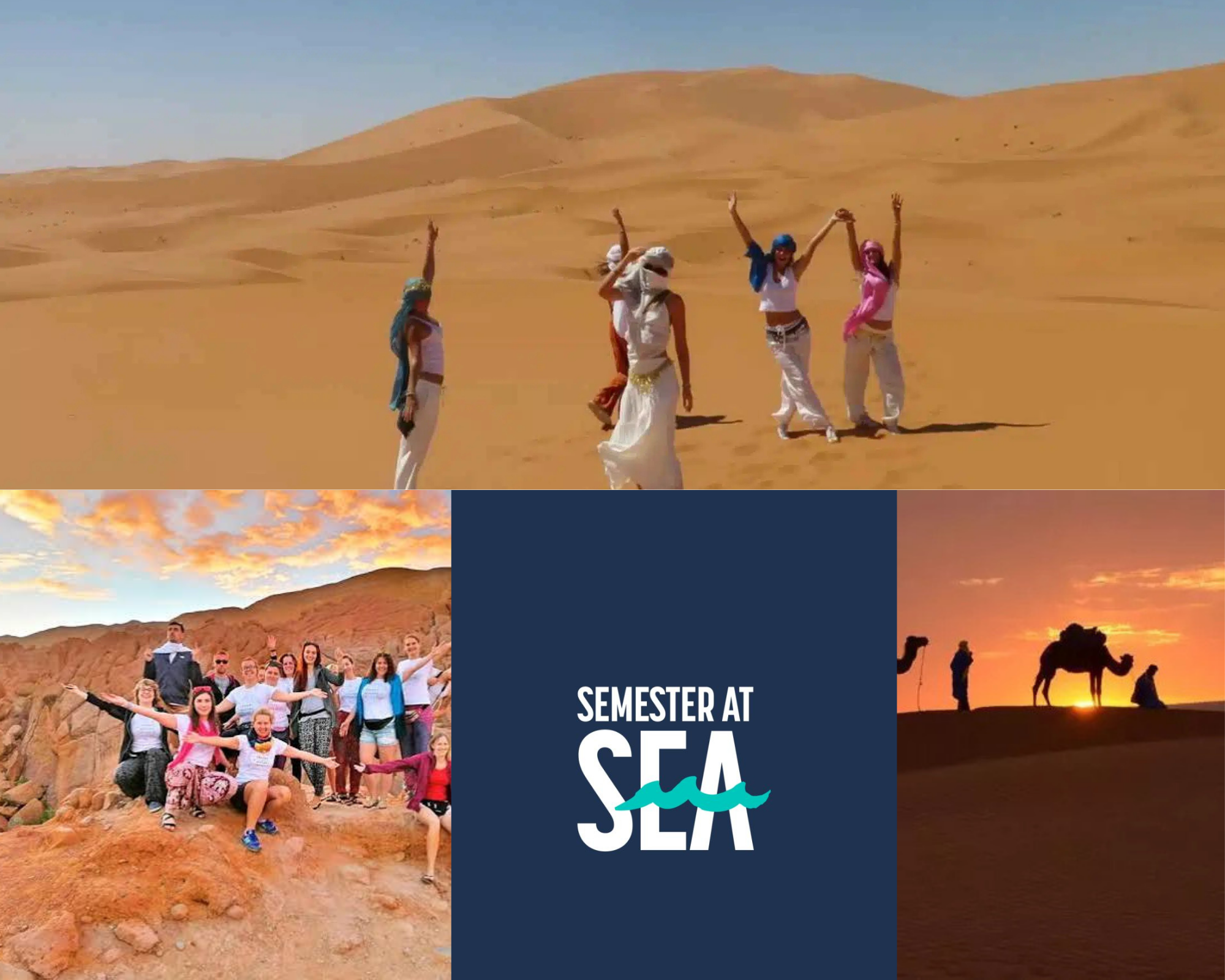
For many international students, the Sahara Desert is one of the most memorable experiences in Morocco.
The desert around Merzouga is known for its impressive sand dunes, particularly the Erg Chebbi dune system.
Camel trekking in Merzouga
A camel ride across the dunes provides a traditional way to experience the desert landscape.
The journey is generally timed around sunset or sunrise, when the changing light creates striking colors across the dunes.
For students, the experience can also provide an opportunity to learn about historical desert travel and the role of camel caravans in trans-Saharan trade.
Spend a night in a desert camp
An overnight stay in a Sahara desert camp allows visitors to experience the desert after sunset.
Depending on the camp, students may enjoy traditional Moroccan meals, local music, storytelling, and time beneath the night sky.
A responsible desert experience should respect the local environment and communities while providing authentic cultural interaction.
Learn About Morocco’s Fossils and Geological History
Morocco is also an important destination for students interested in geology and paleontology.
Regions around Erfoud, Alnif, and the southeastern desert are internationally known for fossils and geological formations.
Why Morocco is interesting for geology students
The region’s geological history includes ancient marine environments that existed millions of years ago.
Fossils found in southeastern Morocco include specimens such as:
- Trilobites
- Orthoceras
- Ammonites
- Other marine fossils
A geology-focused excursion can therefore add an academic dimension to a Semester at Sea Morocco experience.
Moroccan Food as a Cultural Experience
Food is another important part of discovering Morocco.
Moroccan cuisine reflects the country’s geographical position and historical influences.
Students may have the opportunity to try traditional dishes such as:
- Tagine
- Couscous
- Harira
- Pastilla
- Moroccan salads
- Fresh bread
- Mint tea
Learn through a Moroccan cooking experience
A Moroccan cooking class can be a particularly engaging cultural activity.
Students can learn how ingredients are selected, how traditional dishes are prepared, and how food is connected to Moroccan hospitality and family life.
Rather than simply eating Moroccan food, a cooking experience allows visitors to participate in the process.
How Long Should a Semester at Sea Morocco Trip Be?
The appropriate length depends on the student’s schedule and the location of the ship’s port.
For a short visit, it may be better to concentrate on one region rather than attempt to see the entire country.
Short Morocco excursions
A short excursion can focus on destinations such as:
Marrakech:
Ideal for students interested in history, architecture, markets, food, and Moroccan culture.
Casablanca and Rabat:
Suitable for students interested in modern Morocco, politics, architecture, and contemporary urban life.
Tangier:
An interesting choice for students interested in the Mediterranean, international trade, and Morocco’s connection with Europe.
Longer Morocco tours
With more time available, students can travel deeper into the country and combine destinations such as:
Marrakech → Atlas Mountains → Ait Benhaddou → Dades Valley → Merzouga → Fes
This route provides a broad overview of Morocco’s cities, mountains, valleys, desert, and cultural heritage.
Is Morocco Safe for Semester at Sea Students?
Morocco is a popular destination for international travelers, but students should approach their visit with the same basic precautions they would use when traveling anywhere abroad.
Traveling with a reputable local guide can make transportation, communication, navigation, and cultural interaction easier.
Students should also respect local customs, remain aware of their surroundings, keep important belongings secure, and follow any travel guidance provided by their university or Semester at Sea program.
Why Choose a Local Morocco Tour Company?
Organizing transportation across Morocco can be challenging for visitors who are unfamiliar with the country’s roads, distances, and local customs.
A professional local tour company can help students organize:
- Airport or hotel transfers
- Private transportation
- Experienced local drivers
- English-speaking guides
- Cultural visits
- Desert excursions
- Accommodation
- Customized itineraries
- Group tours
Working with a local company can also provide students with more direct interaction with Moroccan communities and businesses.
Semester at Sea Morocco Tours with Gorgeous Morocco Tours
At Gorgeous Morocco Tours, we specialize in private and customized Morocco experiences for international travelers.
Our goal is to help visitors discover Morocco beyond the typical tourist attractions by combining cultural experiences, local knowledge, comfortable transportation, and carefully planned itineraries.
For Semester at Sea students, we can adapt a Morocco experience according to the available time, academic interests, group size, and preferred destinations.
Popular experiences for students
Some of the experiences that can be incorporated into a Semester at Sea Morocco itinerary include:
- Marrakech cultural tours
- Ait Benhaddou excursions
- Atlas Mountains trips
- Amazigh village visits
- Sahara Desert camel trekking
- Merzouga desert camps
- Fes cultural tours
- Moroccan cooking experiences
- Fossil and geology excursions
- Traditional markets and artisan workshops
The itinerary can be designed around education, culture, adventure, or a combination of all three.
Planning Your Semester at Sea Morocco Experience
Before booking a Morocco excursion, students should consider several practical factors.
Check your available time
Morocco is larger than it may appear on a map. Driving between major destinations can take several hours, so the itinerary should be realistic.
Choose experiences based on your interests
Students studying different subjects may benefit from different excursions.
For example:
- History students: Fes, Marrakech, Ait Benhaddou
- Geology students: Atlas Mountains, Alnif, Erfoud, Merzouga
- Anthropology students: Amazigh villages and rural communities
- Environmental students: Mountains, oases, and desert ecosystems
- Cultural studies students: Markets, food, crafts, and traditional communities
- Film students: Ait Benhaddou and Morocco’s famous filming locations
Consider the season
Morocco’s climate varies significantly between coastal areas, mountains, cities, and the Sahara.
Summer can be particularly hot in the desert, while winter can bring cold nights, especially in the Atlas Mountains and Sahara.
Packing appropriate clothing and planning activities around the weather can make the experience much more comfortable.
Frequently Asked Questions About Semester at Sea Morocco
Can Semester at Sea students visit the Sahara Desert?
Yes. Students with sufficient time can travel from major Moroccan cities toward the Merzouga area to experience the Sahara Desert, camel trekking, and overnight desert camps.
What is the best Morocco destination for a first visit?
Marrakech is an excellent introduction to Morocco because it combines history, traditional markets, architecture, cuisine, and easy access to other destinations.
Can a Morocco tour be customized for university students?
Yes. A private itinerary can be adapted according to the group’s interests, schedule, budget, and preferred activities.
Is it possible to combine culture and adventure in Morocco?
Absolutely. A single itinerary can combine historic cities, mountain landscapes, Amazigh cultural experiences, Ait Benhaddou, and the Sahara Desert.
How can students make their Morocco trip more educational?
The best approach is to include experiences that involve local guides and communities rather than focusing only on sightseeing. Visits to artisan workshops, historic sites, rural communities, cooking classes, geological areas, and cultural centers can add educational value.
Discover Morocco Beyond the Classroom
A Semester at Sea journey is an opportunity to learn by experiencing the world directly. Morocco is particularly well suited to this philosophy because its history, geography, culture, and communities provide countless opportunities for exploration.
From the ancient streets of Fes and Marrakech to the Amazigh villages of the Atlas Mountains, the historic architecture of Ait Benhaddou, and the immense dunes of the Sahara, Morocco can turn a university trip into a memorable cultural and educational experience.
Whether you are interested in Moroccan culture, history, geology, anthropology, architecture, food, or desert landscapes, Gorgeous Morocco Tours can help you create an itinerary that makes the most of your time in Morocco.